Advanced rigging · NCCCO Level II
Rigger Level II Study for Arkansas Lead Riggers
A Level I rigger is told what the load weighs and where it balances. A Level II rigger is the one who figures that out. When a mill crew pulls a gearbox with no nameplate, a millwright sets a skid with the heavy end off to one side, or a port crew has to stand an odd-shaped casting upright, somebody has to run the numbers before the crane takes tension. NCCCO's Rigger Level II certification tests that judgment. In Arkansas, which issues no state rigging license and follows federal OSHA, it is one of the clearest ways a lead rigger can document advanced skill.
Topics in this course
- Working out a load's weight from its size and material
- Finding the center of gravity on uneven or hollow objects
- Leg tension when pick points sit at different distances
- Spreader bars, lifting beams and when to use each
- Equalizing arrangements and load sharing between legs
- Rotating, upending and flipping loads in the air
- Hoists, lever pullers and jacks as part of the rigging plan
- Rated capacities of below-the-hook devices
- Checking a lift plan and talking it through with the operator
Jobs where the numbers aren't on a tag
Northeast Arkansas has one of the heaviest concentrations of steelmaking in the United States. Nucor has run plants in Mississippi County for three decades, including the Nucor-Yamato structural mill on the Mississippi River east of Blytheville, and U.S. Steel's Big River operations at Osceola expanded when the company chose the site for a second electric arc furnace flat-rolled mill. Outages and rebuilds at plants of that size are full of non-routine lifts: rolls, drives, furnace components and structural pieces where the rigger has to estimate weight and balance before anything moves.
Industrial work along the Arkansas River adds more. The Port of Little Rock sits inside a large industrial park, Pine Bluff's port has a public terminal for barge transloading, and Fort Smith's port moves mainly steel. Plant installations, tank work and heavy equipment moves at these sites are the kind of picks that call for Level II thinking, with multiple attachment points, uneven legs or a load that has to be turned.
The math, in plain terms
Most candidates who struggle with Level II do so on the calculations, not the gear. Expect to estimate weight from dimensions and material, which means knowing approximate densities for steel, concrete and similar materials and working out volume for plates, pipe and blocks. Center-of-gravity questions ask where a crane hook must sit so the load hangs level.
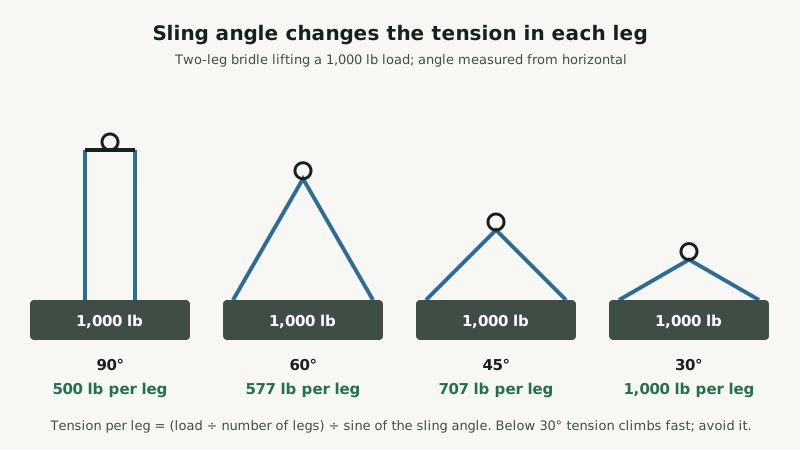
Sling tension is the other big piece. When pick points are not the same distance from the center of gravity, legs carry different shares of the load, and the sling angle makes that worse. The course walks through these problems one step at a time and then mixes them into practice sets so the method sticks.
- Volume times material weight for load estimates
- Balance-point location on two- and three-point picks
- Unequal leg loading from off-center pick points
- Angle factors and their effect on each leg
Exam structure and the Level I link
The Level II written test has 50 multiple-choice questions and a 60-minute limit. NCCCO's practical portion has two tasks: a level lift, with a 15-minute limit, and a frame rotation, with 30 minutes allowed. Either exam can come first, and once you pass one you have 12 months to pass the other.
Level II only stays valid while your Level I is current. The upside comes at renewal: NCCCO lets a Level II holder keep both levels active by passing the Level II written exam. Rigger recertification is written only, inside the final 12 months before expiration, and a lapsed card means starting over with both exams.
What OSHA asks of the person running the rigging
Federal OSHA's crane rules, enforced in Arkansas from the Little Rock Area Office, require a qualified rigger for assembly and disassembly work and for any lift where crew members in the fall zone hook, unhook or guide the load. The employer decides who qualifies, and the standard does not name a certification. On complex picks, though, contractors usually want their lead rigger to hold something more than a general sign-off, and Level II gives them that record.
Level II does not make you a lift director or replace an engineered lift plan. It shows you can read one, check the rigging side of it and catch a problem before the load is airborne. See the Arkansas requirements guide for how the federal pieces fit together.
Studying while you work
Lead riggers rarely have spare days to sit in a classroom. The course runs on any device, around the clock, and saves your progress so you can pick up between shifts, during an outage week or after a storm delay. Practice questions follow the written test format, and the calculation drills can be repeated until the steps are automatic.
Leveling and rotating a real load in front of an examiner is the only way through the practical, so get time on those tasks with your crew or employer. Bring a calculator you know well; it matters on the written test too.
Questions people ask
Can I go straight to Level II without Level I?
You can test for both levels, even in the same session, but a Level II certification is only valid while your Level I is current.
What are the two Level II practical tasks?
NCCCO's practical includes a level lift with a 15-minute limit and a frame rotation with a 30-minute limit, both performed in person with an accredited examiner.
Does renewing Level II also renew Level I?
Yes. According to NCCCO, a Level II certificant only needs to pass the Level II written exam at recertification to keep both levels current.
Do Arkansas mines use Level II riggers?
They can, but limestone quarries and other mines fall under MSHA rather than OSHA's construction crane rules. The rigging principles are the same; the regulator is different.
Crane Courses
-
Mobile Crane Operator
Self-paced study for the NCCCO mobile crane Core and your LAT, TLL or TSS specialty, aimed at Arkansas operators on hydros, all-terrains and crawlers.
-
Tower Crane Operator
Study for the single NCCCO tower crane written exam online, then test hands-on on a hammerhead, luffer or self-erector, as Bentonville and Little Rock projects keep adding cranes.
-
Articulating Crane Operator
Written exam prep for the three NCCCO articulating crane designations, for Arkansas drivers dropping building materials, running log loaders or handling scrap with a grapple.
Start your Arkansas crane certification prep
Name the card you need (operator, rigger or signal person) and the part of Arkansas you work in. An enrollment advisor writes back with the matching course and what the exam steps look like from there.
- Self-paced lessons that open on any device, day or night
- Practice questions written in the style of NCCCO written tests
- Crew enrollment for Arkansas contractors and plants
Ask about enrollment
Short form. Your details are used only to reply to you.