NCCCO Tower Crane · One written exam, hands-on practical
Tower Crane Certification Prep for Arkansas Building Projects
In late 2023, Talk Business reported that a national tower crane index showed Bentonville leading the country in cranes per capita, with more tower cranes up than New York City. Six were on Walmart's new home office campus; others were working on the Crystal Bridges expansion, the Alice L. Walton School of Medicine and a downtown hotel. That kind of activity is why more Arkansas operators are looking at tower crane certification. Arkansas has no state crane license, so federal OSHA rules decide what you need, and for most tower crane work that means an accredited credential such as NCCCO's. This course covers the written exam, at your pace and on your device.
Topics in this course
- How hammerhead, luffing boom and self-erecting cranes differ in setup and limits
- Capacity tables read by jib length, hook radius and parts of line
- In-service wind limits, freeslew and securing the crane at shift end
- Daily checks of limit switches, load moment devices and brakes
- Lifting out of the operator's view and keeping radio talk clean
- Overlapping swing paths and working beside a second crane
- What the operator should know about erection, climbing and dismantling
- Subpart CC rules written for tower cranes, including foundations and pre-erection inspection
What the tower crane written exam weighs
Tower crane certification has no Core-plus-specialty split. There is one written exam, which NCCCO lists at 55 multiple-choice questions with 60 minutes to finish. NCCCO's outline weights it roughly as follows: Site about 10 percent, Erection, Climbing and Dismantling about 25 percent, Operations about 50 percent, and Technical Knowledge about 15 percent.
That breakdown tells you where to spend study hours. Operations is half the score, so chart reading, wind decisions and communication deserve the most attention. The erection and climbing quarter catches mobile crane operators off guard, because it covers procedures they may never have seen up close.
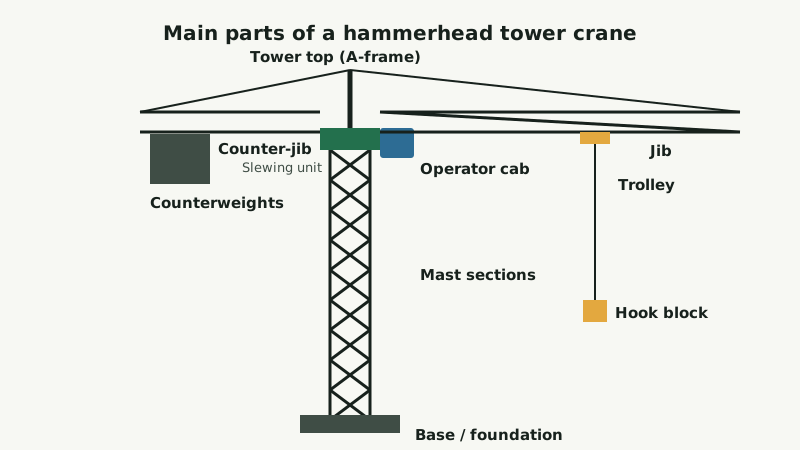
The configuration you choose shows up on the practical: a hammerhead with a trolley, a luffing jib crane, or a self-erecting tower crane. Either exam can come first. Once you pass one, you have 12 months to pass the other, and certification then lasts five years.
Corporate campuses, medical schools and tight downtown lots
Northwest Arkansas has supplied much of the state's recent tower crane work. Walmart's 350-acre home office campus, opened in phases starting in 2025, used several tower cranes at once during construction, which meant zoning plans and constant radio discipline. Mass timber office buildings like the ones on that campus also bring lighter, bulky picks that are sensitive to wind.
Height brings paperwork too. When a 10-story office tower went up in the Pinnacle Hills area of Rogers, the builder had to submit an aeronautical study to the FAA covering the building and the crane. Operators will not file those studies, but they should expect lighting, height limits and similar conditions on cranes near airports.
In Little Rock and Fayetteville, hospital, university and apartment projects on cramped sites often favor luffing jibs that keep the jib out of neighbors' air space, while self-erectors suit lower-rise projects where a crane only needs a few months on site.
Storm season in the cab
Arkansas springs are known for squall lines and tornado warnings that build in an afternoon. A tower crane operator needs to know the manufacturer's in-service wind limit, how the crane must be left so it can weathervane, and who has authority to stop work. Subpart CC puts the duty on the competent person to adjust operations for wind, and the written exam expects you to spot when that line is close.
Summer brings heavy humidity and heat in a glass cab. Long climbs, water supply and relief breaks belong in the day's plan, especially on jobs where the operator stays aloft for most of a shift.
Working through the course
Lessons follow the exam's four domains, with extra practice on tower crane capacity tables, where the hook's distance from the mast changes the allowable load fast. Practice questions are written in a multiple-choice style like the certification test.
This prep covers what you need to know on paper. The hands-on practical happens on a real tower crane with an accredited examiner, and your employer must still evaluate you on that crane under OSHA 1926.1427 before you run it.
- Self-paced, phone or laptop, day or night
- Chart drills for trolley radius and jib length
- Erection and climbing material for mobile crane crossovers
- Practice questions grouped by exam domain
Questions people ask
I already hold a TLL card. Does that cover a tower crane?
No. Tower cranes are a separate NCCCO program, and OSHA requires certification for the type of equipment you operate. You would need to pass the tower crane written exam and a tower crane practical.
Who enforces crane rules on Arkansas building sites?
Federal OSHA, through its Little Rock Area Office, since Arkansas does not run an OSHA State Plan for private employers. Arkansas also does not issue a crane operator license. See our requirements guide.
Should I test on a hammerhead or a self-erector?
Pick the configuration you expect to run. Your card lists the type you passed, and you can add another type later by taking its practical.
Crane Courses
-
Mobile Crane Operator
Self-paced study for the NCCCO mobile crane Core and your LAT, TLL or TSS specialty, aimed at Arkansas operators on hydros, all-terrains and crawlers.
-
Articulating Crane Operator
Written exam prep for the three NCCCO articulating crane designations, for Arkansas drivers dropping building materials, running log loaders or handling scrap with a grapple.
-
Rigger Level I
Self-paced study for the NCCCO Rigger Level I written test, covering slings, hitches, hardware checks and signals for crew members who rig everyday picks with a known load weight.
Start your Arkansas crane certification prep
Name the card you need (operator, rigger or signal person) and the part of Arkansas you work in. An enrollment advisor writes back with the matching course and what the exam steps look like from there.
- Self-paced lessons that open on any device, day or night
- Practice questions written in the style of NCCCO written tests
- Crew enrollment for Arkansas contractors and plants
Ask about enrollment
Short form. Your details are used only to reply to you.