Exam guide · Hands-on · Test sites
Inside the NCCCO Practical Exam: The Hands-On Half of Certification
The practical is the part of certification you cannot read your way through. An examiner watches you run a real crane through a set course with a test weight, a stopwatch and a scoresheet. It rewards smooth, controlled operating and punishes rushing. This page walks through how the mobile crane practical is organized, how candidates in Arkansas typically get onto a test site, and what usually costs people points. Task details below come from NCCCO's mobile crane candidate handbook, which changes between editions, so read the current one for your exact course layout and time limits.
The tasks on a mobile crane practical
The current mobile crane handbook lays the exam out as a sequence of tasks. Exact numbering and optimum times differ between editions and between crane types (fixed-cab telescopic, swing-cab telescopic and lattice boom), but the shape is consistent.
- Pre-operational inspection of the crane, as you would at the start of a shift
- Placing a chain in a stop circle, raising and lowering with control and setting it down inside a marked circle
- Following hand signals given by the examiner, using the standard signal chart
- Placing the overhaul ball into barrels, a precision task with little room for swing
- Negotiating a zigzag corridor with the test weight, forward and then in reverse, without letting the load touch the ground or knocking the pole barrier
- Safe shutdown and securing of the crane at the end
How scoring works, and where candidates lose points
Each task has an optimum time and a list of point deductions. Going over time costs points, and the handbook allows the proctor to stop a task and move on once a candidate passes one and a half times the optimum. Touching the ground with the load outside the allowed area, knocking a pole or barrel over, bumping the load into outriggers or stabilizers, and similar contact faults all come off the score. Taking a shortcut that circumvents the course can cost every point for that task.
Common trouble spots, described in general terms:
- Chasing the clock and starting a swing before the load has settled
- Telescoping when the handbook says not to; recent editions bar telescoping during the practical
- Losing track of the hook-to-load relationship on the reverse corridor run
- Skipping or rushing parts of the pre-operational inspection
- Being unfamiliar with the specific test crane's controls and load chart
Signals are part of the test
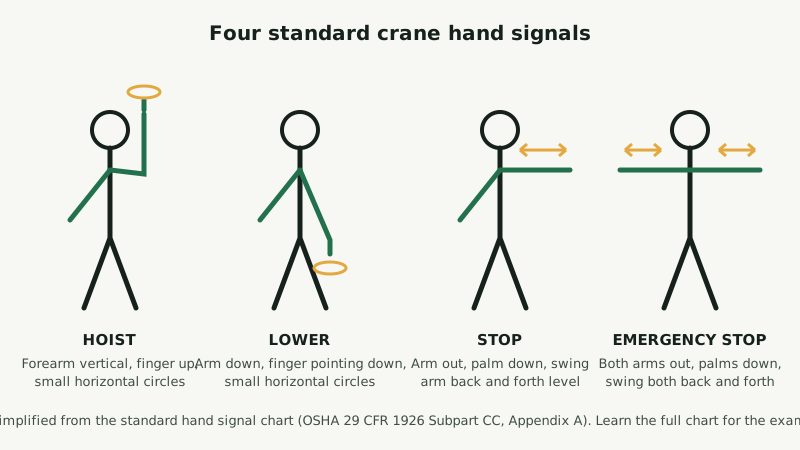
One task asks you to respond to hand signals from the examiner, so the standard signals need to be automatic: hoist, lower, swing, boom up and down, stop, emergency stop and the rest of the chart. An operator who hesitates or guesses at a signal loses time and points, and in real work, that hesitation is where accidents start.
If you are not sure of the full chart, learn it from the ground up. Our signal person course covers the signals in detail, and it is a credential worth having in its own right.
How practical test sites are arranged
Unlike the written exams, there is no home or test-center option. A practical exam happens at a site that has a crane meeting NCCCO's requirements, a Test Site Coordinator, an accredited Practical Examiner and proctors. The coordinator submits a test site application to NCCCO, sets up the course to NCCCO's layout drawing, prepares the crane and sets the testing schedule. Cranes used for testing must comply with OSHA requirements and the applicable ASME B30 standard, and the coordinator confirms the crane has enough capacity at the farthest test radius to handle the test weight.
In practice, Arkansas candidates reach a practical in a few ways: an employer or union that hosts its own test administration, a training provider that runs combined training-and-testing sessions, or a public test event listed through NCCCO's test location tools. Some candidates travel toward larger metros such as Little Rock, Memphis, Dallas or Tulsa for a convenient date. We don't promise any particular site or schedule. Contact the Test Site Coordinator to confirm a date and ask which crane you will test on.
Candidates may bring their own crane for a mobile practical. The handbook asks that its annual inspection be current and the crane be in full working order.
Preparing: seat time first, everything else second
The best preparation is hours at the controls of a crane like the one you will test on. If you run a boom truck daily, the TSS practical will feel familiar; if your experience is on a different machine, get supervised time on the test crane type before you go. Operators-in-training can build those hours legally only under the conditions in 1926.1427, with a trainer monitoring on site.
Ask whether you can practice on a similar course layout. Use the familiarization time the handbook allows on test day to check the controls, the load chart and the crane's response. Arrive rested; a hot July afternoon in Arkansas wears on concentration, so bring water and pace yourself between tasks. The mobile crane operator course reviews inspection, chart and rules content in exam-style practice questions, and the enrollment form is the way to ask about it.
Why online study cannot stand in for this exam
Reading cannot teach you how a load drifts when you feather the swing, or how much the boom deflects as you lift. That feel only comes from operating. What study does do is make the practical less stressful: if you already know the inspection points, the signals, the chart and the rules about telescoping and ground contact, your attention is free for the machine.
Remember the 12-month window between your written and practical results, and plan both together. Our written exam guide covers the other half, and how to become a crane operator in Arkansas shows where both fit. For the federal rules behind all of this, see the Arkansas requirements guide.
Questions people ask
Can I take the practical before the written?
Yes. The 12-month window starts with whichever exam you pass first, and you must pass the matching one within that time.
If I fail the practical, how soon can I retest?
NCCCO's four-week retake wait applies to written exams, not practicals. How soon you can go again depends on when a test site can fit you in, so ask the Test Site Coordinator about the process.
Do I need my own crane?
No. Test sites supply cranes that meet NCCCO requirements. You may bring your own for a mobile crane practical if its inspections are current and it is in full working order.
Do recertifying operators retake the practical?
Operators who can document at least 1,000 hours of crane-related experience during their certification period can skip the recertification practical. See mobile crane recertification.
Related courses
-
Mobile Crane Operator
Self-paced study for the NCCCO mobile crane Core and your LAT, TLL or TSS specialty, aimed at Arkansas operators on hydros, all-terrains and crawlers.
-
Signalperson
Study for the NCCCO Signalperson written test on any device, covering standard hand signals, voice and radio communication, crane behavior and the federal OSHA rules for directing a lift.
-
Articulating Crane Operator
Written exam prep for the three NCCCO articulating crane designations, for Arkansas drivers dropping building materials, running log loaders or handling scrap with a grapple.
-
Crane Recertification
A focused refresher for Arkansas operators renewing an NCCCO mobile crane certification, covering the core and specialty written tests, the renewal timeline and the 1,000-hour practical waiver.
Start your Arkansas crane certification prep
Name the card you need (operator, rigger or signal person) and the part of Arkansas you work in. An enrollment advisor writes back with the matching course and what the exam steps look like from there.
- Self-paced lessons that open on any device, day or night
- Practice questions written in the style of NCCCO written tests
- Crew enrollment for Arkansas contractors and plants
Ask about enrollment
Short form. Your details are used only to reply to you.